
Burn First Aid
What you do in the first few minutes after a burn matters enormously. Correct first aid can significantly reduce the severity of the injury and the length of recovery. Wrong first aid can make things much worse.
If a burn occurs, do this immediately:
- Remove the source of heat — move the person away from flames, hot surfaces, chemicals, or electrical sources. Protect yourself first.
- Cool the burn with cool running water for at least 20 minutes — start as soon as possible. Do not use ice, iced water, or cold packs.
- Remove jewellery and tight clothing near the burned area — before swelling begins. Do not remove anything stuck to the skin.
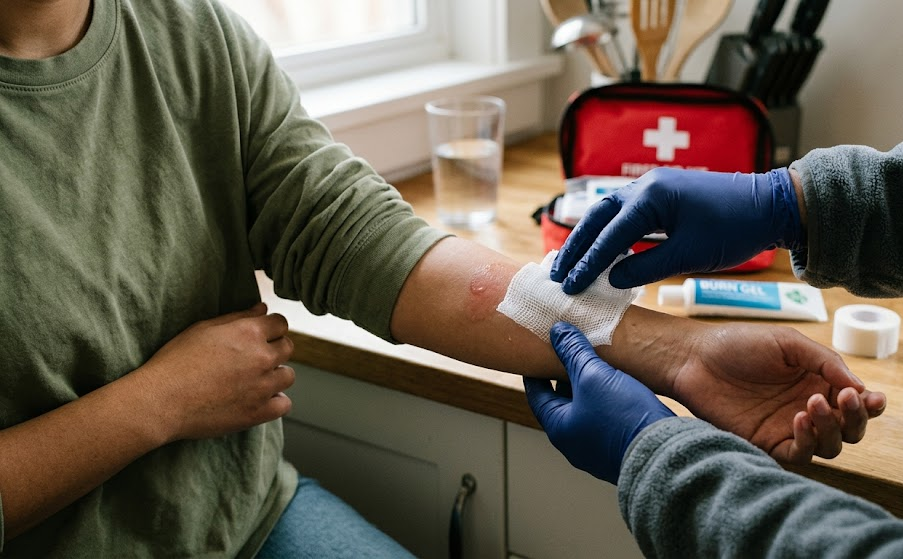
- Cover the burn loosely with a clean, non-fluffy material — a clean cloth, cling film, or a clean plastic bag works well. Avoid cotton wool.
- Seek medical attention immediately — especially for burns on the face, hands, feet, genitals, or joints; burns larger than the palm of the hand; burns in children or the elderly; and any chemical or electrical burns.
What NOT to do — ever:
These are common but dangerous mistakes. They delay healing, increase infection risk, and can cause serious harm.
❌ Do not apply toothpaste — it traps heat and introduces bacteria
❌ Do not use butter, oil, egg white, or any food substance — these do the same
❌ Do not burst blisters — they are a natural barrier against infection
❌ Do not apply ice or ice water — this can cause further tissue damage
❌ Do not use cotton wool, fluffy towels, or adhesive bandages directly on the burn
❌ Do not give the person alcohol or aspirin for pain without medical guidance
When in doubt — cool it, cover it, and get to a hospital.
Burn Prevention Tips
Most burns happen at home, often in seconds, and often to children. Here is what you can do to reduce the risk.
In the Home
- Keep hot liquids — tea, soup, cooking oil — away from the edges of tables and counters where children can reach them
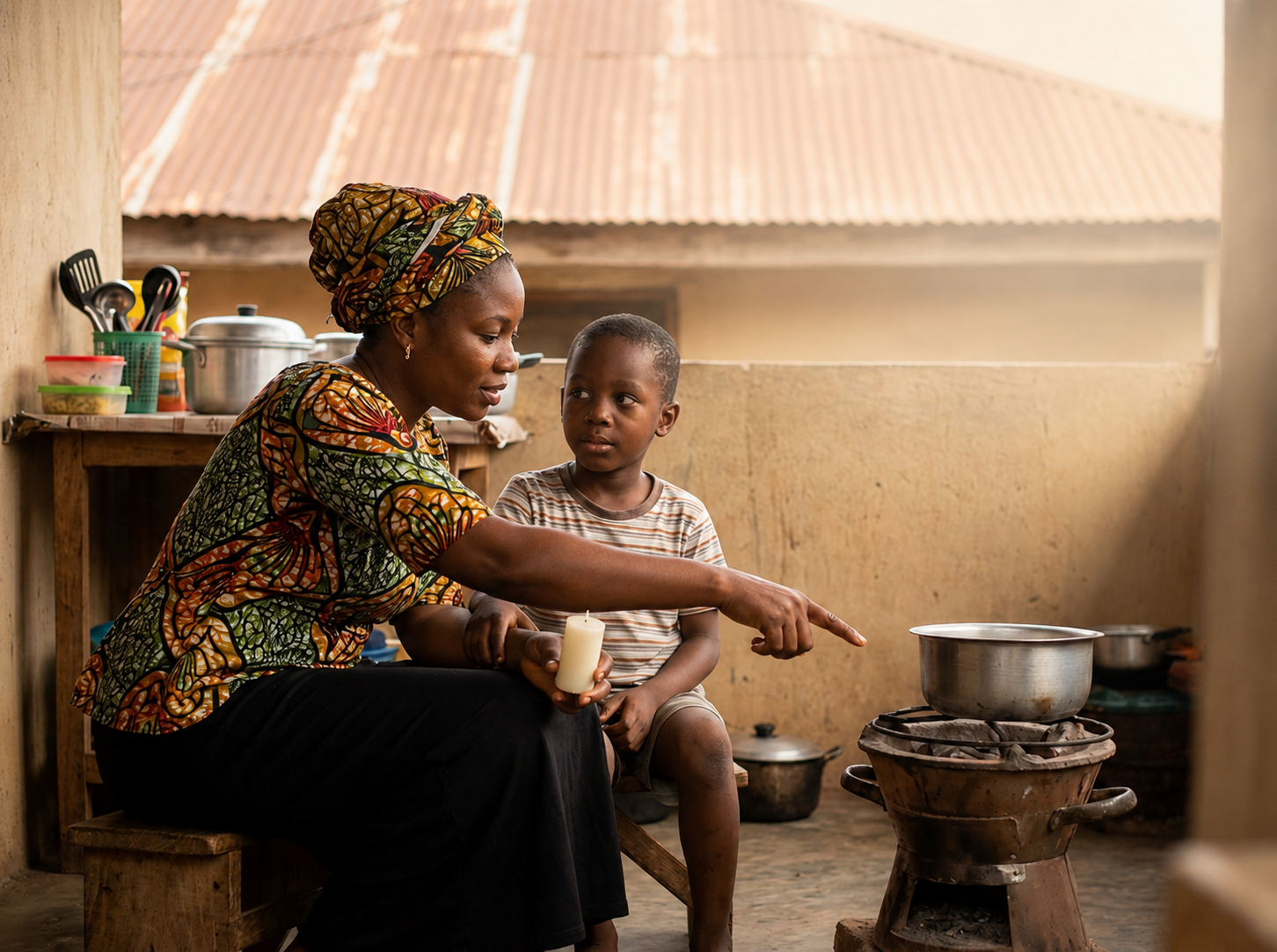
- Always turn pot handles inward on the stove so they cannot be grabbed or knocked over
- Never leave cooking unattended, even for a moment
- Keep matches, lighters, and candles out of the reach of children at all times
- Check water temperatures before bathing young children — set your water heater to below 50°C where possible
- Use electrical appliances safely: do not overload sockets, replace frayed wires immediately, and keep electrical items away from water
- Store kerosene, fuel, and chemicals in clearly labelled, sealed containers out of reach of children
- Install a smoke detector and check the battery every six months
In Schools
- Ensure fire extinguishers are accessible, clearly marked, and regularly serviced
- Conduct fire safety drills at least twice a year — and take them seriously
- Teach children from an early age: Stop, Drop, and Roll
- Train teachers and school staff in basic burn first aid
- Keep science labs, kitchens, and workshops properly supervised at all times
In the Workplace
- Provide all staff with fire safety training during onboarding and annually thereafter
- Maintain clear, unobstructed emergency exits
- Ensure proper handling and labelling of chemicals and flammable materials
- Equip high-risk areas — kitchens, factories, labs — with appropriate fire suppression systems
- Appoint designated fire wardens and make sure everyone knows who they are